Our Focus
As a coalition we want to reach all literacy stakeholders—especially those new to the science of reading. It’s important that we help grow the knowledge around which programs and practices are evidence-based and that result in high gains for our students. And which are NOT.
The Why
As a collective we are dedicated to improving literacy outcomes across Long Island through research-based practice, advocacy, and community partnerships.
Our goal is simple: raise awareness, empower educators and parents, and advocate for instructional practices that ensure ALL students have the support they need to become proficient and skilled readers!
Why should you care about what’s happening in literacy instruction? Because the reality is that many schools on Long Island rely on disproven or ineffective methods rather than utilize the science of reading research to inform their program and curriculum decisions.
Not all literacy programs are created equal and … “the school that’s on the slow road to better instruction is sacrificing another year of children..”
What The Data Shows

2024 NAEP Reading Results — New York (Grade 4)
Fourth-grade students in New York scored an average of 215, nearly identical to the national average (214) and unchanged from both 2022 and 1998.
- Proficiency: 31% of students reached NAEP Proficient or above, essentially flat for 25 years.
- Basic: 59% of students met the Basic level, showing little change since 1998 (62%).
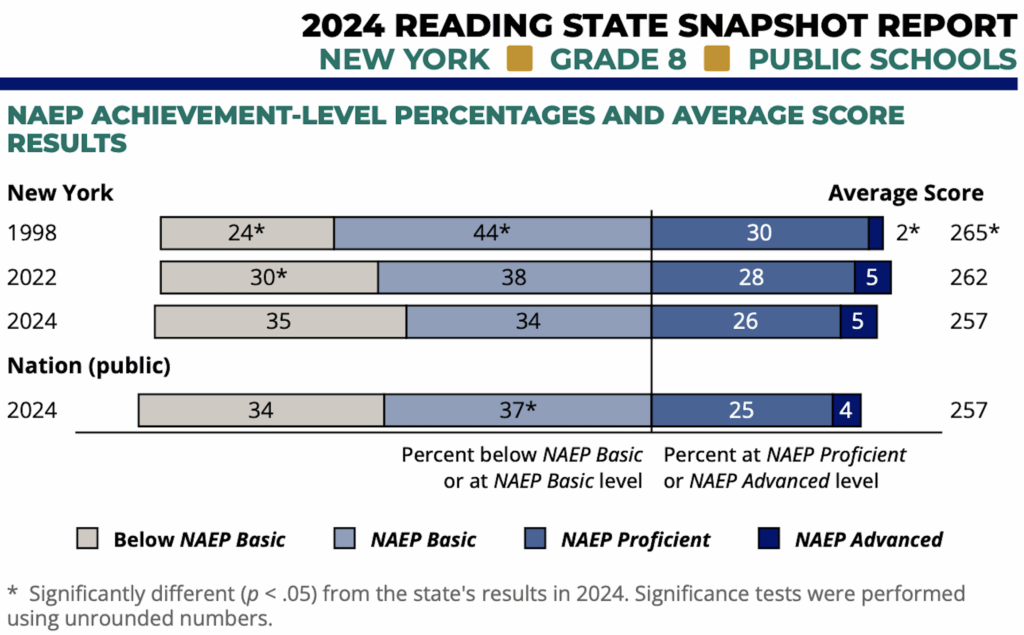
2024 NAEP Reading Results — New York (Grade 8)
Eighth-grade students in New York scored an average of 257, the same as the national average and not significantly different from 2022. However, scores remain below 1998 levels (265).
- Proficiency: 31% of students reached NAEP Proficient or above — unchanged since 1998.
- Basic: 65% of students met the Basic level, down from 70% in 2022 and 76% in 1998.
The 2024 NAEP results reveal a troubling pattern: in both 4th and 8th grade, New York’s reading scores have remained flat for decades, and fewer than one in three students reach proficiency.
The Goal
Connecting research, practice, and community.
The Long Island Literacy Coalition™ is committed to moving literacy forward through goals that connect research, practice, and community — translating evidence into action and collaboration into results.
Evidence-Based Instruction
Advocating for clear, systematic teaching so every student develops the skills needed to read and write proficiently.
Shared Learning Spaces
Creating monthly forums where educators and families examine evidence-based practices and research findings together.

Our Commitments
✓ Build Collaboration Across LI
✓ Engage with Legislators
✓ Advance Equity in Literacy